

ZKTeco
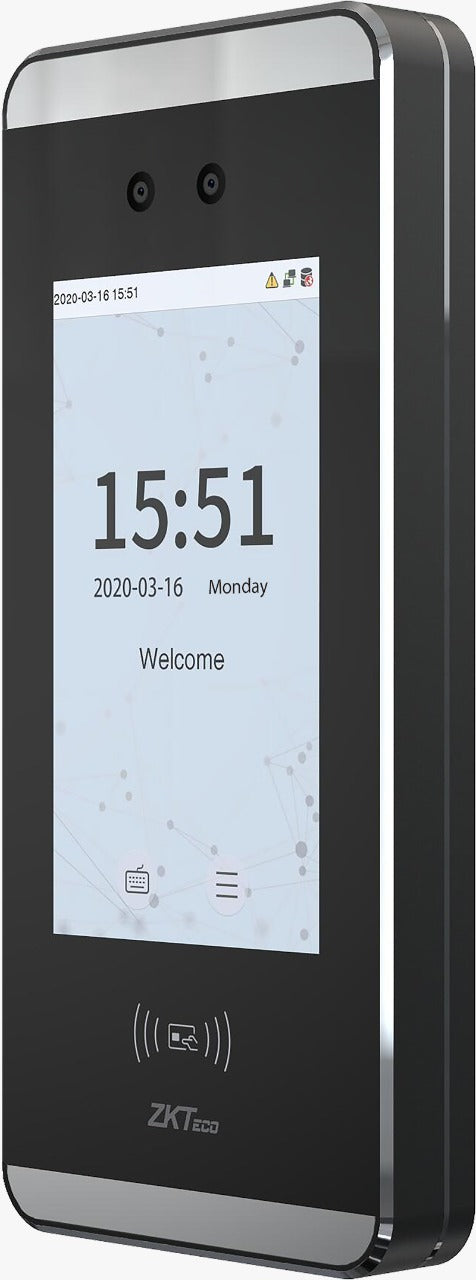
ZKTeco Mini AC+B Face Recognition Terminal
ZKTeco Mini AC+B Face Recognition Terminal
Couldn't load pickup availability
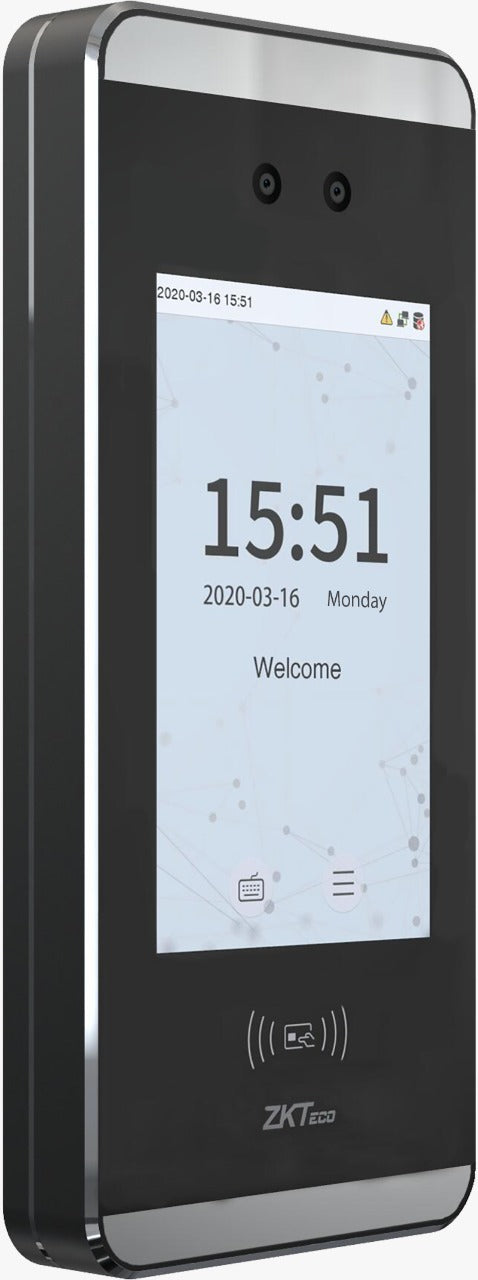
ZKTeco MiniAC+ B – Face Recognition Time Attendance & Access Control Terminal
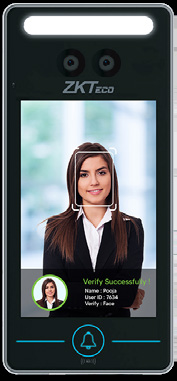
The ZKTeco MiniAC+ B is a compact Linux-based time attendance and access control terminal featuring advanced visible-light facial and palm recognition technology. Designed for fast, touchless, and hygienic user authentication, the device combines computer vision technology with deep learning algorithms to provide reliable biometric verification.
The MiniAC+ B intelligently detects faces and supports touchless palm authentication using advanced hand-tracking technology. Its facial and palm recognition algorithms are designed to provide long-range recognition with a wide pose-angle tolerance, making the terminal suitable for convenient access control and attendance applications.
With multiple connectivity options including TCP/IP, USB Host, Wi-Fi, Wiegand input/output, and RS485, the MiniAC+ B can be integrated into a variety of access control and attendance management environments.
Key Features
Uses ZKTeco visible-light facial recognition technology to provide fast and convenient biometric authentication without requiring physical contact.
Supports touchless palm authentication using advanced hand-tracking techniques for hygienic and convenient user verification.
Computer vision technology and deep learning algorithms intelligently detect faces and hands to improve biometric recognition performance.
The facial and palm recognition algorithms support long-range biometric identification, helping users authenticate without needing to position themselves directly against the terminal.
Advanced recognition algorithms provide extra-wide pose-angle tolerance, helping maintain convenient authentication when users are not directly facing the device.
The MiniAC+ B is designed around contactless user authentication methods, supporting safer and more hygienic access and attendance verification.
Supports TCP/IP, USB Host, Wi-Fi, Wiegand input/output, and RS485 for flexible integration with access control and attendance systems.
Authentication Methods
- Face Recognition
- Touchless Palm Recognition
Connectivity & Interfaces
- TCP/IP
- USB Host
- Wi-Fi
- Wiegand Input / Output
- RS485
System Compatibility
- Windows
- Android
- Linux
Applications
- Corporate Offices
- Commercial Buildings
- Factories and Industrial Facilities
- Educational Institutions
- Government Buildings
- Healthcare Facilities
- Hygiene-Sensitive Environments
- Time Attendance Systems
- Access-Controlled Entrances
- Employee Attendance Management
Specifications
| Parameter | Specification |
|---|---|
| Model Name / Number | Mini AC |
| Product Type | Linux-Based Time Attendance & Access Control Terminal |
| Type of Attendance | Face |
| Attendance System | Face Recognition |
| System Type | Fingerprint Access Control |
| Biometric Technology | Visible-Light Face Recognition & Touchless Palm Recognition |
| Capacity | 1,000 |
| Connectivity | TCP/IP, USB Host, Wi-Fi, Wiegand Input / Output, RS485 |
| Display Type | LCD |
| Operating System | Linux-Based |
| Supported Operating Systems | Windows, Android, Linux |
| Dimensions (L × W × H) | 72.94 × 157.94 × 23 mm |
Frequently Asked Questions
The MiniAC+ B supports visible-light face recognition and touchless palm recognition for biometric user verification.
Yes. The terminal is designed for touchless authentication using facial and palm recognition, helping provide a more hygienic user verification experience.
The MiniAC+ B uses computer vision technology and deep learning algorithms, combined with advanced hand-tracking techniques for palm recognition.
Yes. Its recognition algorithms support long-range facial and palm recognition with extra-wide pose-angle tolerance.
The MiniAC+ B supports TCP/IP, USB Host, Wi-Fi, Wiegand input/output, and RS485 connectivity for integration with compatible systems.
The supplied specifications list Windows, Android, and Linux as supported operating systems. The terminal itself is Linux-based.
The provided specification lists a capacity of 1,000 users.
Share